

Do we still have choices after Gaokao?

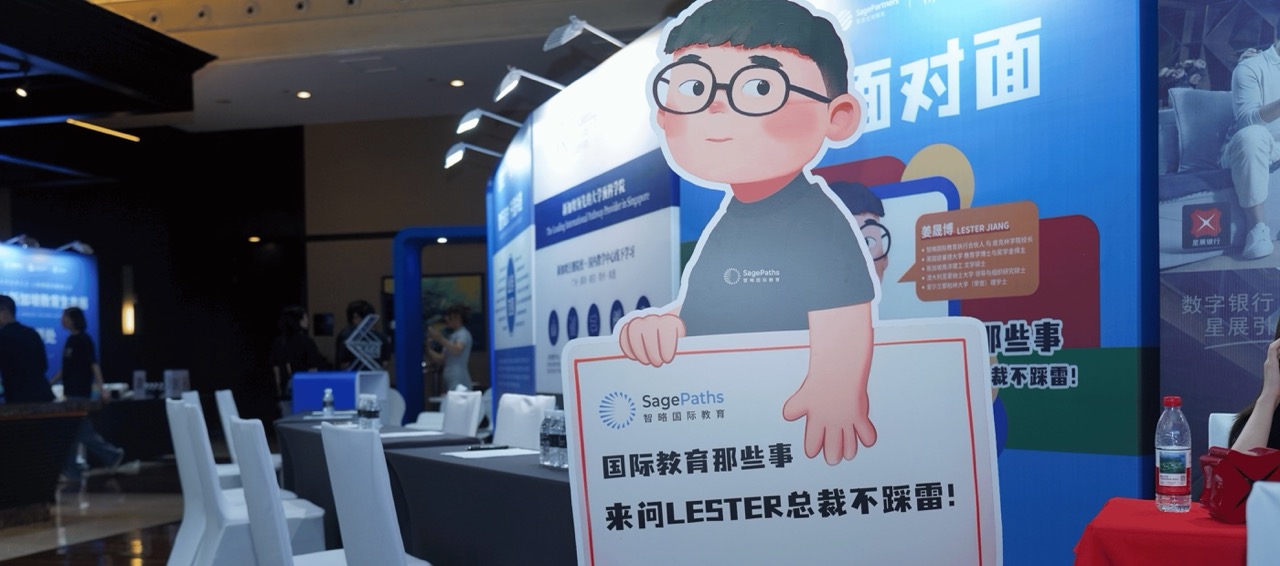
@SagePaths Global Education — Guiding You Every Step of the Way
Before the Gaokao, many families may appear to be waiting for results. In reality, they are already waiting for something else: once the scores are released, will their child still have options?
So while supporting their child through the final stretch, parents are quietly checking entry requirements for Singapore’s public universities. They may want to wait for the results first, yet still worry whether private education pathways are reliable — and whether preparing only after results are released will be too late.
This is not overthinking.
Today, the Gaokao is no longer a decision that can be solved by simply filling in one university preference form.
Applications, programme selection, language preparation, visas, accommodation and supporting documents all take time — and every step can affect how many options remain available.
That is why more forward-looking families are shifting their mindset from “waiting for results” to “planning ahead.”
They are looking at Singapore not as a last-minute fallback after the Gaokao, but because they see its relatively clear progression routes, stable living environment and education pathways that can be assessed and planned in advance.
For Gaokao families, mature preparation does not mean scrambling for alternatives only after the results disappoint. It means opening another door before the results are even released.
Learning about Singapore early is not about creating anxiety — it is about making sure that when the scores arrive, your child still has choices.
Many parents still assume that studying in Singapore is only possible for students with exceptionally high scores.
But one reason Singapore has attracted growing attention in recent years is precisely because there is no single pathway.
Students with different academic results and different backgrounds can pursue different routes that suit where they are now — and where they want to go next.
Many families in this group focus on Singapore’s public universities, particularly NUS (National University of Singapore) and NTU (Nanyang Technological University).
In recent years, shifting employment trends across Asia — together with Singapore’s international environment, strong industry connections and English-speaking education system — have led more families who once looked only to the UK or US to reconsider Asia’s top universities.
One point is often overlooked: Singapore’s public universities are not a pathway that can be easily rushed into only after Gaokao results are released.
Beyond Gaokao scores, applications may also involve:
English-language results, academic background, application materials, programme fit, and interviews for selected courses.
👉 That is why many families now start researching timelines and application strategies before the Gaokao.
This is one of the fastest-growing groups in our recent enquiries. Many parents are thinking the same thing: “We may not want our child to repeat a year, but we still want to keep the door open for future progression.”
That is why more families are taking a fresh look at Singapore private institutions + overseas partner university pathways.
In the past, the word “private” often triggered immediate concern. Today, families are increasingly asking more practical questions:
➯ Can this pathway still lead to postgraduate study?
➯ Is the qualification formally recognised?
➯ What are the future career prospects?
➯ Is this route actually suitable for my child?
In fact, many private institutions in Singapore are connected to university systems in countries such as the UK and Australia.
For families with the following priorities, this can offer a more practical and stable route:
Avoid repeating the Gaokao year / Progress more quickly into an international bachelor’s degree / Keep postgraduate options open / Maintain greater control over cost and distance.
Another clear shift has emerged in recent years.
More families with diploma or vocational education backgrounds are now exploring top-up degree routes, postgraduate progression pathways, and skills-based international options.
This is because employers are increasingly looking beyond academic labels alone.
In fast-growing fields such as AI, new energy, biotechnology and advanced manufacturing, the combination of technical skills + international exposure is becoming increasingly valuable.
👉 More families are beginning to realise that while Gaokao results and academic qualifications still matter, future competitiveness will depend on far more than a single score.
Over the years, SagePaths has worked with many families. The question we hear most is no longer:
“Which school is the best?”
It is:
“Which pathway is actually right for my child?”
Because in many cases, what shapes a student’s future is not just the school itself. It also depends on:
➯ Can they adapt to the pace of learning?
➯ Can they handle the language demands in time?
➯ Does the pathway suit their personality and current learning state?
➯ Are they aiming for employment, postgraduate study, or long-term international development?
That is why public and private education should never be reduced to a simple question of “which one is better?”
They are better understood as two different pathways, with different rhythms and different advantages.
1. Public Universities May Be a Better Fit For Students Who:
➯ Have a strong academic foundation
➯ Have relatively stable English proficiency
➯ Can handle a more competitive academic environment
➯ Hope to enter a research-focused or highly ranked university system
2. Private Pathways May Be a Better Fit For Students Who:
➯ Want to enter an international undergraduate pathway more quickly
➯ Place greater value on future postgraduate and career progression
➯ Do not want to spend another year under the pressure of repeating the Gaokao
➯ Want to keep more flexibility for future adjustments
In many cases, the most important choice is not the “best” option on paper — but the pathway that best fits where the student is right now.
Many families assume:
“We can wait until the Gaokao results are released before we start preparing.”
But in reality, more international education pathways are moving towards an earlier application window.
This is especially true in Singapore. Many institutions operate on a rolling admissions basis, while places in popular programmes, student accommodation and language courses can change quickly.
That is why many families choose to complete the key preparation in advance, so they can move straight into the application process once Gaokao results are released:
Initial profile assessment / School shortlisting / Programme direction / Language planning / Document preparation
If families wait until the first week after the Gaokao results to start handling:
Score assessment / School selection / Programme confirmation / Language arrangements / Visa planning / Accommodation booking / Document preparation
the entire process can quickly become reactive.
When everything is pushed into the short period after results are released, there simply may not be enough time.
The real point of “apply as soon as results are out” is not speed.
It is about having already mapped out the next steps before the results arrive — so that when the scores are finally released, the family is ready to act instead of scrambling to catch up.
One thing SagePaths has come to understand more deeply in recent years is this:
Families who plan well are no longer looking for just one “correct answer”.
They care more about:
➯ Whether their child still has room to grow in the future
➯ Whether the pathway can be adjusted when circumstances change
➯ Whether today’s decision creates long-term value
That is why more families are now preparing several options in parallel:
Domestic university pathways / International pathways / Singapore options / Postgraduate progression / Career opportunities in Asia
Because what truly matters today is not making one perfect choice.
It is keeping the ability to choose again in the future.
The Gaokao is important. But it should never become the only answer.
And what many families ultimately regret is not simply a disappointing score — it is realising that when a new opportunity appeared, there was no longer enough time to prepare for it.
🔍
❓ How can my child apply to Singapore after the Gaokao?
❓ Public or private — which pathway is the better fit?
❓ What options are available for students across different score ranges?
❓ What should families prepare in advance for a Singapore application using Gaokao results?
❓ Is it still possible to apply after the results are released?